The Royal Stelae
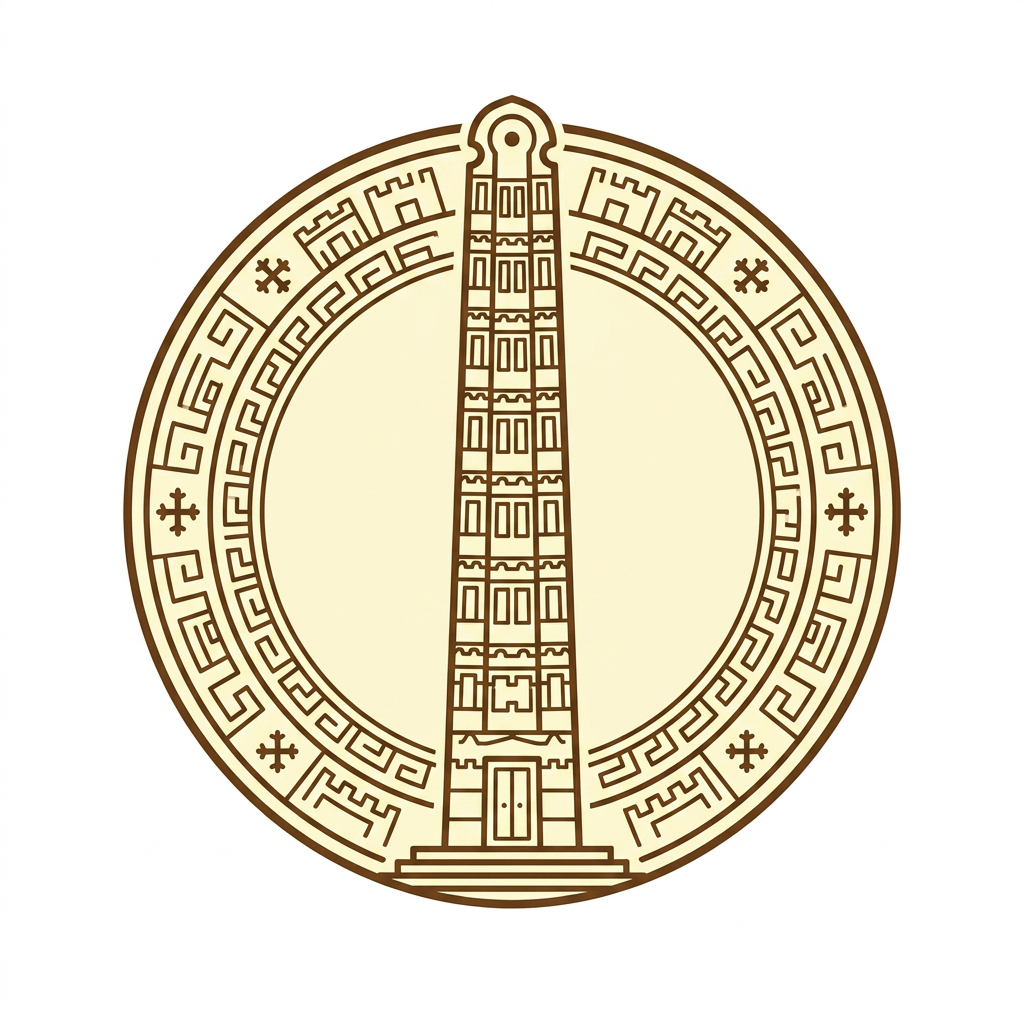
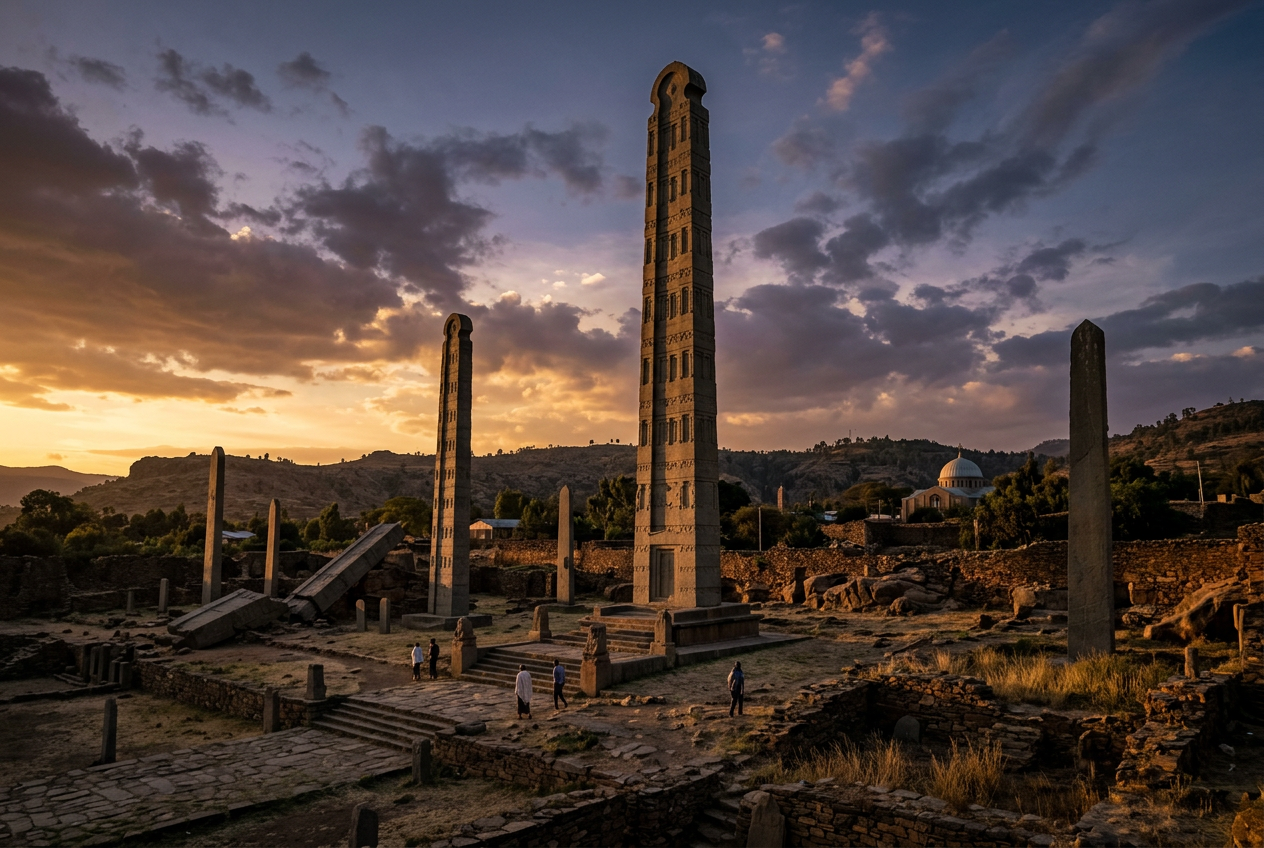
Monolithic granite obelisks carved as multi-storey towers, marking the tombs of Aksumite kings.
An Ethiopian empire of obelisks — and the enduring faith of Emperor Aste Yohannes.
From the highlands of northern Ethiopia, the Kingdom of Aksum rose to bridge the worlds of Rome, Persia, India and Arabia. Enriched by Red Sea trade through its great port of Adulis, Aksum minted its own coinage, raised towering granite stelae, and in the 4th century became one of the first nations on Earth to embrace Christianity.
Born Lij Kassa Mercha in Tigray around 1831, he was crowned Emperor Yohannes IV in the sacred city of Aksum on 21 January 1872 — restoring the imperial throne after decades of division. A devout guardian of the Ethiopian Orthodox faith, he defended the nation's sovereignty against Egyptian, Italian and Mahdist invasions until his death in battle at Metema in 1889.
Born Lij Kassa Mercha into the Tigrayan nobility, descended from a royal line.
Crowned Emperor Yohannes IV at Aksum, taking the Solomonic title 'King of Zion, King of Kings'.
Decisively defeated invading Egyptian armies at the Battles of Gundet and Gura, securing the north.
King Menelik II of Shewa recognized Yohannes as overlord, uniting the empire.
Leading his army against the Mahdists at Gallabat, he was mortally wounded and died a guardian of his nation.
Monolithic granite obelisks carved as multi-storey towers, marking the tombs of Aksumite kings.

Priests preserving a 1,600-year unbroken Christian liturgy.

Timket, Meskel and Hidar Zion fill Aksum with chant, color and devotion.
The field of giant obelisks, including the returned Obelisk of Aksum.
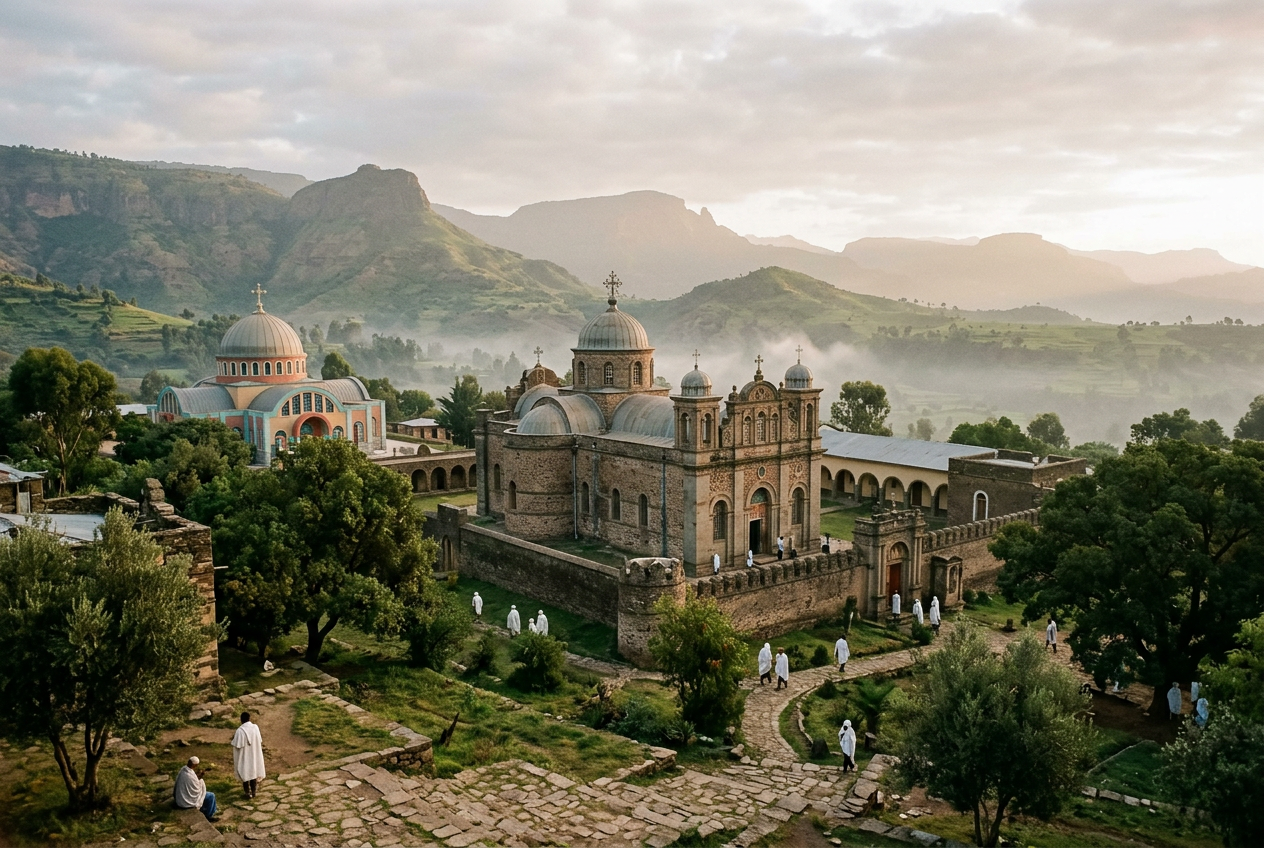
Holiest church in Ethiopia, believed to hold the Ark of the Covenant.

Sprawling ruins of a royal residence echoing legendary wealth.
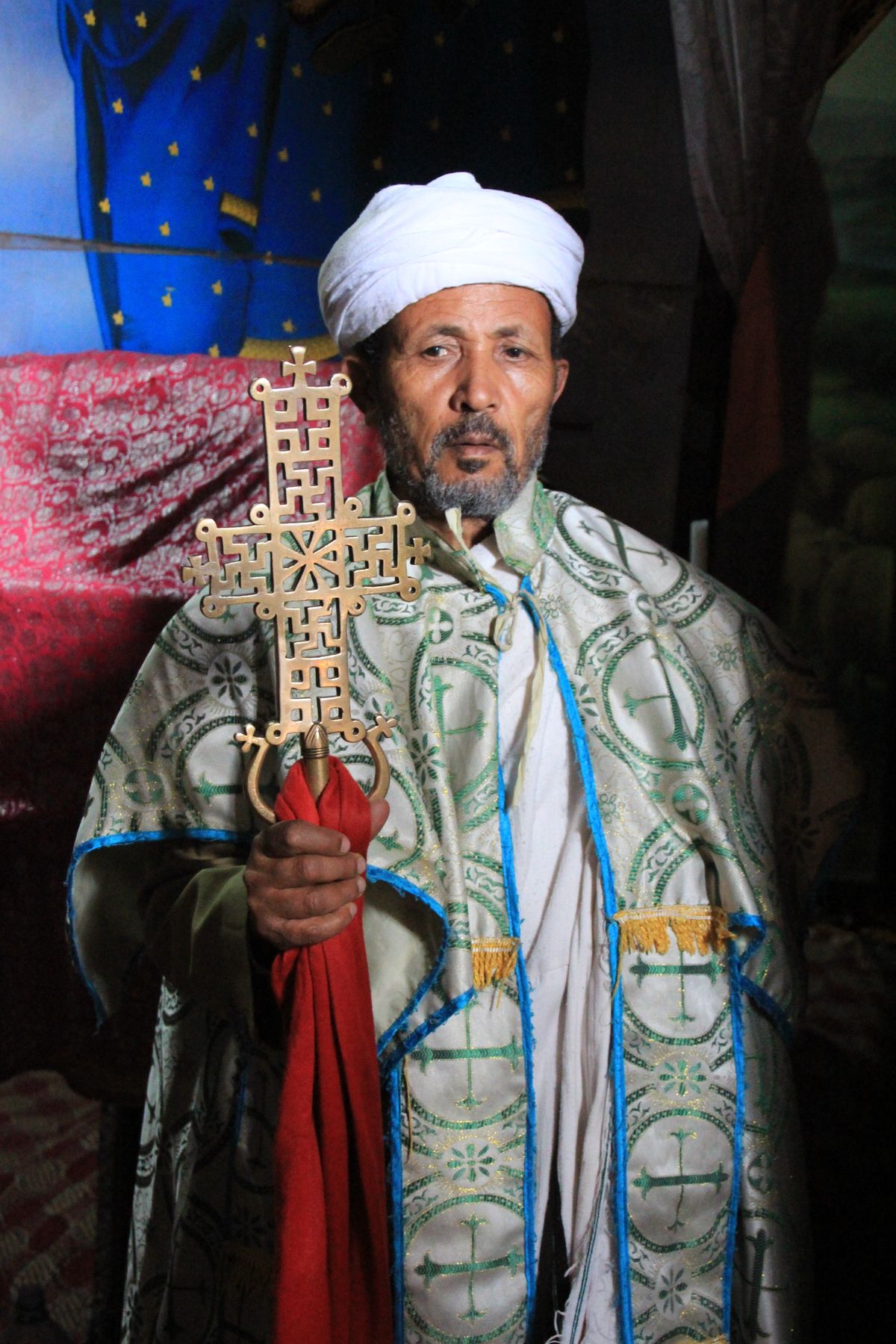
Coins, inscriptions and artifacts spanning three millennia.
Planning a pilgrimage, research trip or cultural tour to Aksum? Send us a message and our heritage team will respond.